
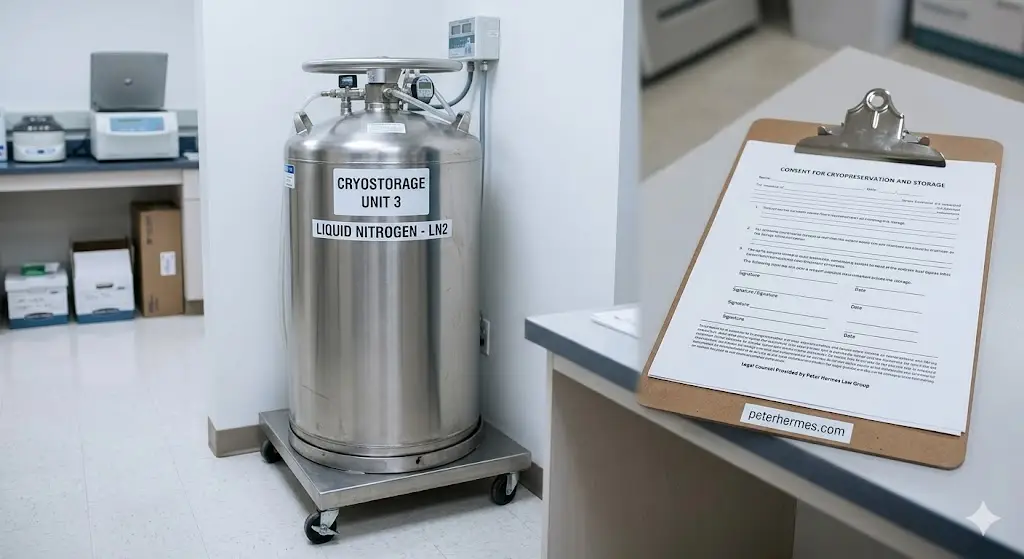
Few questions in family law are more emotionally and ethically charged than what happens to frozen embryos when a marriage ends. The couple began the IVF process united in a future they hoped to share. By the time of divorce, that future has dissolved—but the embryos exist, waiting in cryostorage, and someone must decide their fate.
California courts have developed a framework for these disputes, but the law continues to evolve. The leading California case, Findley v. Lee (2015), established the controlling approach: contract terms govern. When the contracts are ambiguous or absent, courts must apply a balancing analysis with constitutional weight on both sides. Here is how California handles these cases in 2026.
The Contract-First Rule
Most fertility clinics require couples to sign agreements before creating embryos. These agreements typically address what happens in the event of death, divorce, or disagreement—choices include destruction, donation to research, donation to other couples, or storage by one spouse. California courts strongly favor enforcing these contracts, and Findley v. Lee held that a clear contract requiring destruction in the event of divorce was enforceable even though the wife wanted to use the embryos.
Why Contracts Matter So Much
- They preserve the parties’ actual intent at the time of contracting
- They reduce the need for courts to make personal moral decisions
- They give clinics clear authority to act
- They protect both parties’ constitutional interests in procreation and in not procreating
When the Contract Is Ambiguous or Missing
When the IVF agreement is silent, ambiguous, or unenforceable for some reason, California courts have looked to the balancing approach articulated in cases from other jurisdictions. The court weighs:
- The party seeking to use the embryos—whether they have other reasonable means of becoming a parent
- The party seeking to prevent use—their interest in not being forced into unwanted parenthood
- Whether the embryos are the only realistic chance for the seeking party (e.g., infertility, medical treatments)
- The disposition options available—destruction, donation to research, anonymous donation, or transfer to one party
The Constitutional Stakes
Both procreation and the right not to procreate are recognized as constitutionally protected liberty interests. Courts have generally given more weight to the right not to procreate, reasoning that forcing biological parenthood on an unwilling person creates lifelong consequences—legal, emotional, and financial—that the destruction of an embryo does not.
What Couples Should Do Before IVF
- Read the clinic agreement carefully and discuss every disposition scenario
- Consider drafting a separate, more comprehensive agreement with independent legal advice
- Address what happens if one spouse dies, becomes incapacitated, or remarries
- Specify whether either spouse can use the embryos with a future partner
- Address the cost of continued storage and who pays during a divorce
What to Expect in Divorce
When divorcing parties reach the embryo question, common approaches include:
- Honoring the original IVF agreement, especially if both parties signed it with knowledge of its terms
- Negotiating a new written agreement that reflects current circumstances
- Continuing storage temporarily while settlement is finalized, with cost allocation specified
- Donating embryos to research or another couple if both parties consent
- Destroying the embryos if both parties consent or the contract requires it
Use by One Spouse Without the Other’s Consent
California courts have generally not authorized one spouse to use embryos over the other’s objection, except in narrow circumstances. The reasoning is that the objecting spouse retains a constitutional right not to be forced into biological parenthood. The exception that has appeared in some cases—where the embryos are the only realistic path to biological parenthood for an infertile spouse—remains limited and fact-specific.
Storage Costs During and After Divorce
Annual cryostorage fees range from a few hundred to a few thousand dollars. Settlement agreements should specify:
- Who pays for ongoing storage
- What happens if one party stops paying
- A timeline by which final disposition must occur
- How decisions about disposition will be made
Genetic Material Beyond Embryos
Similar issues arise with frozen sperm, frozen eggs, and other genetic material. The contractual framework is generally similar, though gametes (eggs and sperm) raise fewer constitutional issues than embryos because they are not yet a combined genetic product.
Frequently Asked Questions
Q: Are frozen embryos considered property in California?
A: They occupy a unique legal status—not quite property, not quite persons. Courts apply contract and constitutional principles rather than ordinary property division rules.
Q: Can my spouse use our frozen embryos against my wishes after divorce?
A: In California, generally no. Courts have given strong weight to the right not to procreate, and most agreements provide for destruction or donation in this scenario.
Q: What if we never signed an IVF agreement?
A: The court applies the balancing approach. Outcomes are highly fact-specific and often favor preservation of both parties’ constitutional interests through nonparticipation.
Suggested internal links:
- Link to: Same-Sex Divorce in California: Unique Legal Considerations
- Link to: California Divorce Timeline
- Link to: Areas of Practice → Dissolution
🧬 Frozen embryo disputes deserve careful, compassionate counsel. Call Hermes Law Group at (213) 368-0000 for confidential guidance.